
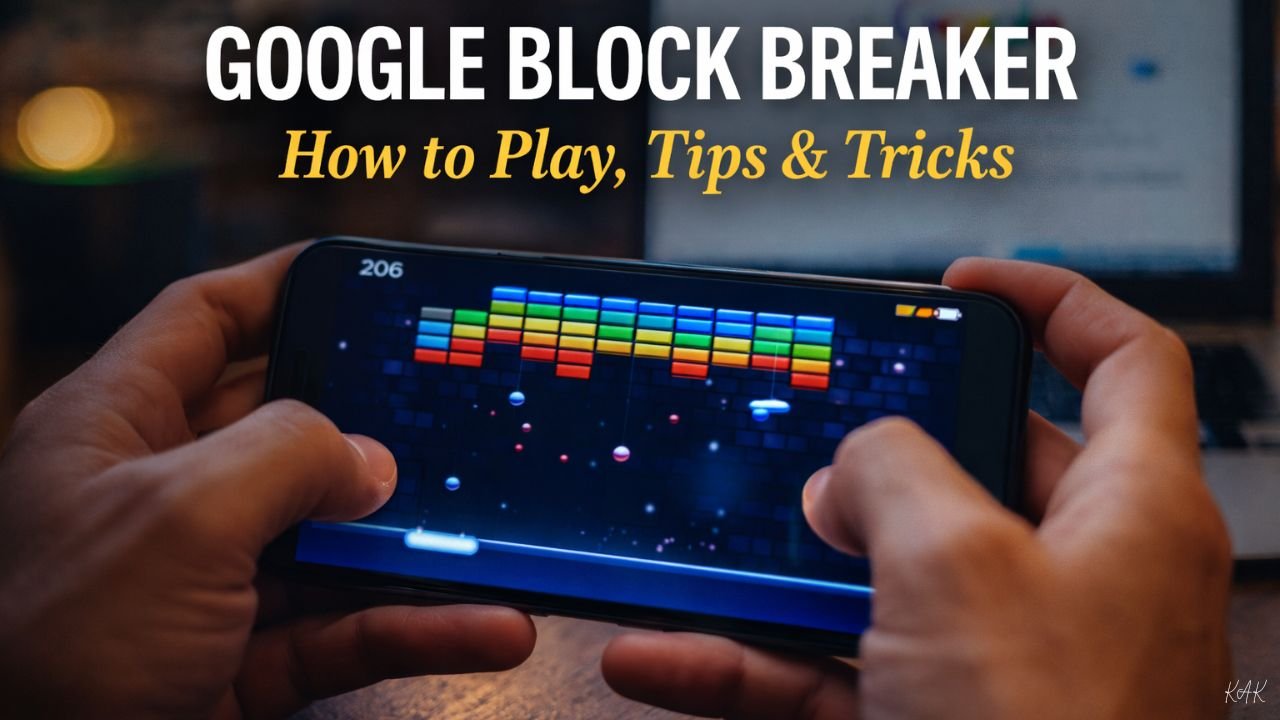
Google block breaker In the vast universe of interactive search experiences, few surprises delight users quite like Google Block Breaker. What began as a simple browser based nod to classic arcade games has grown into a nostalgic and engaging mini game that blends retro charm with modern accessibility.
If you enjoy quick casual gaming sessions during study breaks or work pauses, this digital brick breaking experience offers a satisfying mix of simplicity and challenge. In this comprehensive guide, we explore what Google Block Breaker is, how it works, why it became popular, and what makes it stand out in the world of browser games.
What Is Google Block Breaker?
Google Block Breaker is a hidden browser game inspired by classic brick breaking arcade titles. The concept is simple. A player controls a paddle at the bottom of the screen, bouncing a ball upward to break rows of colorful blocks. The objective is to clear all blocks without letting the ball fall past the paddle.
The game pays tribute to early arcade legends like:
-
Breakout
-
Arkanoid
These titles defined an entire genre of action puzzle gaming. Google Block Breaker recreates that addictive formula within a modern web environment.
Unlike traditional downloadable games, Google Block Breaker runs directly in a browser. There is no installation required, which makes it instantly accessible to millions of users around the world.
The Origins of the Brick Breaker Genre
To understand Google Block Breaker, it helps to look at the history of the genre.
Breakout
Released by Atari in 1976, Breakout introduced players to a minimalist but deeply engaging concept. A bouncing ball, a movable paddle, and a wall of bricks were all it took to create a gaming phenomenon. The game required quick reflexes and careful angles, rewarding skill and concentration.
Arkanoid
A decade later, Arkanoid expanded the formula with power ups, varied level designs, and dynamic brick types. It modernized the concept and introduced strategic elements that increased replay value.
Google Block Breaker carries forward this legacy while simplifying the experience for modern web users.
How to Play Google Block Breaker
The beauty of Google Block Breaker lies in its simplicity.
Basic Controls
-
Move the paddle horizontally using arrow keys or mouse movement
-
Keep the ball in play
-
Break all visible blocks to complete the level
Core Gameplay Mechanics
-
Ball Physics
The direction of the ball changes depending on where it hits the paddle. Precision matters. A slight shift in angle can determine whether you clear a cluster of blocks or miss entirely. -
Progressive Difficulty
As levels advance, brick arrangements become more complex. The ball speed may increase, demanding quicker reaction time. -
Score Tracking
Points accumulate with each block destroyed. Higher accuracy and fewer mistakes typically result in better overall performance.
Because the rules are straightforward, players of all ages can understand the game within seconds.
Why Google Block Breaker Became Popular
Several factors contribute to its growing appeal.
1. Instant Accessibility
There is no need for downloads, subscriptions, or advanced hardware. The game runs directly in a browser window, making it ideal for quick sessions.
2. Nostalgia Factor
Retro gaming aesthetics continue to captivate users. Pixel inspired visuals and simple sound effects remind players of classic arcade experiences from past decades.
3. Short Session Design
Modern users often prefer bite sized entertainment. Google Block Breaker fits perfectly into five to ten minute breaks between tasks.
4. Minimal Learning Curve
Unlike complex multiplayer titles, this game does not require tutorials or detailed instructions. Anyone can start playing immediately.
Game Design and User Experience
The design of Google Block Breaker reflects modern digital minimalism.
The screen is uncluttered. Blocks are neatly aligned, colors are vibrant yet not overwhelming, and the paddle is clearly visible. This visual clarity improves reaction speed and overall enjoyment.
Whether using a mouse or keyboard, the paddle movement feels precise. This responsiveness is essential for maintaining engagement in reflex based games.
Early stages help players gain confidence. Later levels gradually introduce faster ball speeds or more strategic brick layouts. The progression feels fair rather than frustrating.
Educational and Cognitive Benefits
While primarily a casual game, Google Block Breaker also offers cognitive advantages.
Improved Hand Eye Coordination
Players must track the ball’s movement while positioning the paddle accurately. This sharpens reflexes and coordination.
Strategic Thinking
Angles matter. Instead of randomly bouncing the ball, experienced players intentionally aim for weak spots in brick formations.
Stress Relief
Short arcade style games can provide a mental reset. Engaging with a simple objective helps reduce cognitive overload from work or study tasks.
Comparing Google Block Breaker to Classic Arcade Titles
Let us compare its features to older classics.
| Feature | Breakout | Arkanoid | Google Block Breaker |
|---|---|---|---|
| Platform | Arcade | Arcade | Browser |
| Power Ups | Minimal | Advanced | Limited or simplified |
| Graphics | Monochrome | Colorful | Modern minimalist |
| Accessibility | Coin operated | Coin operated | Free and instant |
The modern browser adaptation may lack some of the advanced power up mechanics of Arkanoid, but it compensates with convenience and ease of access.
The Role of Hidden Google Games
Google has become known for embedding playful interactive experiences within its ecosystem. These hidden games often appear as Easter eggs or special features.
Some well known examples include:
-
Google Chrome Dino
-
Pac-Man (featured in a Google interactive version
Google Block Breaker fits into this tradition of blending utility with entertainment. These games transform ordinary browsing moments into interactive experiences.
SEO and Digital Search Impact
From a digital marketing perspective, Google Block Breaker contributes to:
-
Increased user engagement
-
Longer time spent on search pages
-
Viral social sharing
When users discover hidden games, they often share the experience on social media platforms. This organic buzz strengthens brand personality and enhances Google’s image as innovative and playful.
Keywords commonly associated with the topic include:
-
Google hidden games
-
Google arcade games
-
browser brick breaker game
-
play block breaker online
These semantic variations improve discoverability and search visibility.
Tips to Improve Your Performance
If you want to score higher in Google Block Breaker, consider these strategies.
1. Control the Angle
Aim to hit the ball with the edge of the paddle for sharper angles. This helps target hard to reach bricks.
2. Stay Centered
Avoid hugging one side of the screen. Maintaining a central position allows quicker reaction to sudden ball direction changes.
3. Focus on Gaps
Clearing a vertical path through bricks allows the ball to bounce above and destroy multiple blocks quickly.
4. Maintain Rhythm
Panic leads to missed shots. Keep a steady rhythm and anticipate where the ball will land rather than reacting at the last second.
The Psychology of Arcade Simplicity
One reason Google Block Breaker resonates with users is its psychological design.
Simple goals trigger a sense of immediate accomplishment. Each broken block provides instant visual feedback. This reinforces engagement and motivates players to continue.
The game loop is straightforward:
-
Bounce
-
Break
-
Score
-
Repeat
This repetitive yet rewarding structure is a hallmark of successful arcade design.
Accessibility Across Devices
Modern users access content from desktops, laptops, tablets, and sometimes mobile browsers. Browser based mini games like adapt easily across devices.
This cross platform compatibility ensures broader audience reach. It also aligns with the growing demand for lightweight, on demand digital entertainment.
Cultural Relevance in the Digital Era
Retro gaming has experienced a resurgence in popularity. Younger audiences discover vintage concepts through modern remakes, while older players reconnect with childhood memories.
sits at the intersection of nostalgia and innovation. It respects classic arcade design while leveraging modern web technology.
In a fast paced digital world dominated by high budget multiplayer games, a simple brick breaking experience offers refreshing contrast.
Why Casual Browser Games Still Matter
Despite the rise of advanced console and mobile games, browser based arcade titles continue to thrive.
Reasons include:
-
Low commitment
-
Quick entertainment bursts
-
No financial barrier
-
Universal accessibility
Google Block Breaker proves that engaging gameplay does not require complex storylines or cutting edge graphics.
The Future of Micro Gaming Experiences
As search engines evolve, interactive content may become even more integrated into browsing experiences. Mini games can:
-
Enhance brand personality
-
Increase user retention
-
Encourage exploration
Google Block Breaker represents a broader trend where functionality meets entertainment.
Future iterations could potentially introduce leaderboards, additional levels, or seasonal themes, expanding replay value while maintaining simplicity.
Final Thoughts
Google Block Breaker is more than a hidden arcade distraction. It is a modern tribute to classic brick breaking games that shaped early digital entertainment.
Inspired by legendary titles like Breakout and Arkanoid, this browser based mini game captures the essence of reflex driven fun while remaining accessible to everyone.
Its clean design, intuitive controls, and nostalgic charm make it a perfect example of how simplicity can still captivate modern audiences.
Whether you are taking a short work break, exploring hidden Google features, or revisiting classic arcade mechanics, Google Block Breaker delivers a satisfying and timeless gaming experience.
In a digital landscape filled with complexity, sometimes all you need is a paddle, a bouncing ball, and a wall of colorful blocks waiting to be cleared.